Unlock Bountiful Harvests: The Ultimate Guide to Using Row Covers for Thriving Broccoli, Cabbage, and Cauliflower
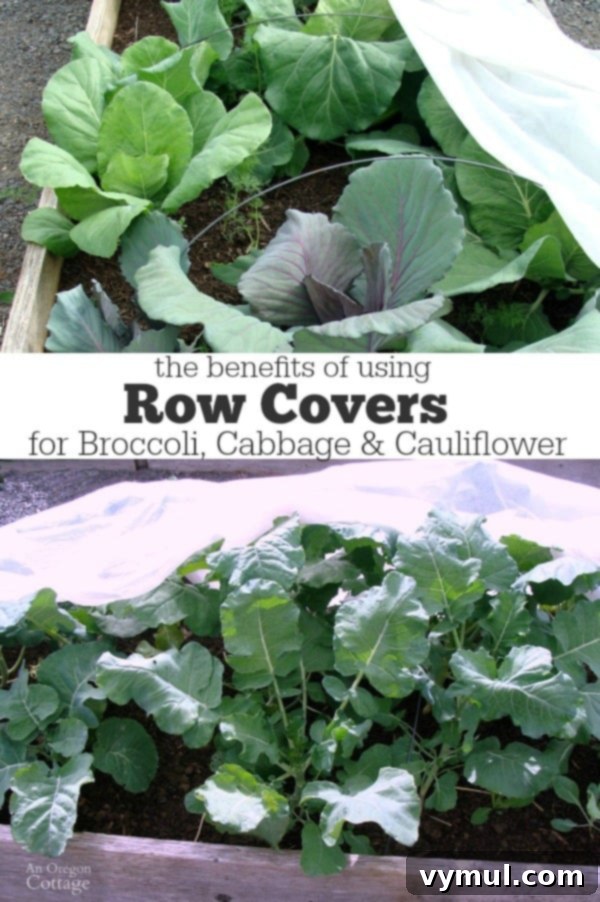
Imagine a garden where your precious brassicas — broccoli, cabbage, and cauliflower — grow vigorously, free from the relentless assault of pests and the unpredictable whims of weather. This isn’t just a gardener’s dream; it’s a reality made possible by the intelligent use of row covers. These simple yet incredibly effective tools offer unparalleled bug protection and weather resilience, leading to stronger, healthier, and significantly more productive plants.
Some links in this article are affiliate links and if you click on them I will receive a small commission at no cost to you.
Through years of personal trial and error in my own gardening endeavors, one of the most transformative discoveries I’ve made concerns the cultivation of early spring, cool-season vegetables. These include beloved brassicas, also known as ‘cole’ crops, such as broccoli, cabbages, and cauliflower. My experience has unequivocally shown that these plants absolutely thrive when grown under a lightweight garden fabric, commonly referred to as a row cover.
My initial foray into growing broccoli was, to put it mildly, a disaster. That very first year, I was forced to discard every single head and every side shoot the plants produced due to a devastating aphid infestation. I tried every homemade remedy imaginable – vinegar solutions, warm water sprays, even hot water treatments – but the aphids were so entrenched and numerous within the intricate crevices of the broccoli heads that it was utterly impossible to remove them all. The harvest was completely lost, a truly disheartening experience for any gardener.
Determined not to repeat the same mistake, the following year I decided to try a new approach. I planted my brassicas and immediately covered them with a light, floating row cover. This material, sometimes known as Remay, garden fabric, or a frost blanket, was my last hope for keeping the insidious bugs at bay and securing at least a partial harvest. The results were nothing short of astonishing. I was pleasantly surprised to find that it worked wonderfully, effectively preventing aphid colonies and largely deterring cabbage loopers (though I admit, I didn’t keep the edges perfectly sealed, so a few still snuck in). Crucially, this allowed us to finally experience the incredible taste and tenderness of home-grown broccoli – a far cry from the store-bought variety, with stems that were remarkably soft and never tough!
Since that pivotal year, using a row cover for my broccoli has become an indispensable practice. Furthermore, I’ve consistently planted broccoli alongside cabbage and cauliflower in the same garden bed, as they all belong to the same brassica family. Consequently, the entire bed gets covered, ensuring that none of our hard-earned produce is shared with unwelcome insect pests.
What truly cemented my commitment to this method was the undeniable observation: plants grown under the protection of a row cover were consistently healthier, grew significantly faster, and produced a harvest much sooner than any plants I attempted to grow without this protective layer! This realization transformed my gardening approach for brassicas forever.
Illustrated Benefits of Using Row Covers for Brassicas
How to Effectively Deploy Row Covers in Your Garden
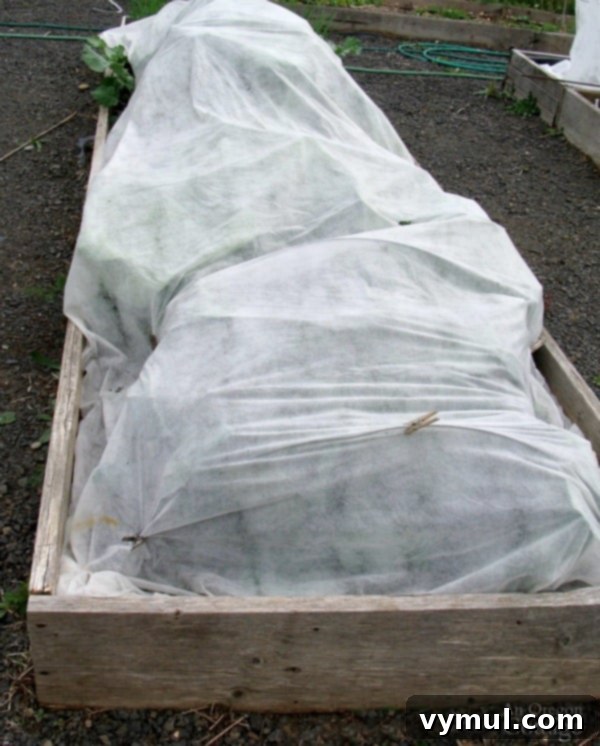
Implementing row covers is a straightforward process that yields immense benefits. The image above showcases a 4’x12′ raised bed in mid-May, diligently planted with three distinct sections of broccoli, cabbage, and cauliflower. The journey begins much earlier in the spring, typically around April, when the seedlings are first transplanted into the garden.
To support the lightweight fabric and ensure it doesn’t smother the tender plants, short portable metal hoops are strategically inserted into the soil along the length of the bed. These hoops form a sturdy skeletal structure over which the floating row cover is draped. The fabric is then securely fastened to the hoops using clothespins, while the edges and corners are anchored to the ground with rocks or by utilizing specialized Earth Staples. This secure attachment is crucial to prevent wind from dislodging the cover and to ensure a tight seal against crawling or flying pests.
While it’s technically true that lightweight fabric can rest directly on the plants without hoops, offering a degree of protection, my experience with home-started seedlings has taught me the value of hoops. My seedlings are often quite fragile, and in early spring, we frequently experience heavy rainfall. The hoops provide an invaluable extra advantage, preventing the wet fabric from weighing down and damaging delicate young plants. They create a crucial air space, promoting better air circulation and reducing the risk of disease.
As you can observe in the accompanying photograph, plants grow rapidly under the cover. Eventually, they begin to outgrow the initial space. Immediately after this picture was taken, I demonstrated this adaptive aspect by loosening the clips and repositioning the rocks to allow for the plants’ continued upward and outward growth. This flexibility ensures the row cover can accommodate the full growth cycle of your brassicas.
The Compelling ‘Why’ Behind Using Row Covers for Brassicas
The decision to employ row covers for your brassica crops is backed by a multitude of benefits that directly translate into a more successful and abundant garden:
1. Superior Pest Protection: The physical barrier created by the row cover is remarkably effective at deterring a wide array of common brassica pests. This includes, but is not limited to, aphids, cabbage loopers, flea beetles, and even the cabbage worm moth, which lays eggs that hatch into destructive larvae. By preventing these pests from even reaching your plants, you drastically reduce damage and the need for chemical interventions, leading to truly organic and healthy produce.
2. Creation of an Optimal Microclimate: Although brassicas are celebrated as “cool weather crops,” they respond exceptionally well to a slightly warmer and more protected growing environment. The lightweight fabric subtly elevates the temperature beneath the cover, typically by 5-10 degrees Fahrenheit. This slight warmth provides a significant growth advantage, especially during erratic spring weather. This is vividly illustrated in the example below:
When the row cover is temporarily pulled back, the visible surge in growth is undeniable. The cabbages (positioned at the front) and cauliflower (at the back) have flourished, exhibiting robust, healthy, and vibrant green growth. This accelerated development is a direct result of the consistent, slightly elevated temperature and protection provided by the cover.
Beyond warmth, these covers also shield delicate plants from harsh environmental elements. They offer crucial protection from strong winds that can desiccate leaves and stunt growth, as well as from excessive spring rains and damaging hail that frequently occur. The cover acts as a buffer, ensuring the plants experience stable and conducive growing conditions. (And if you’re curious about the ferny plants nestled in between, they are self-seeded dill – oh, and of course, an ever-present weed or two!).
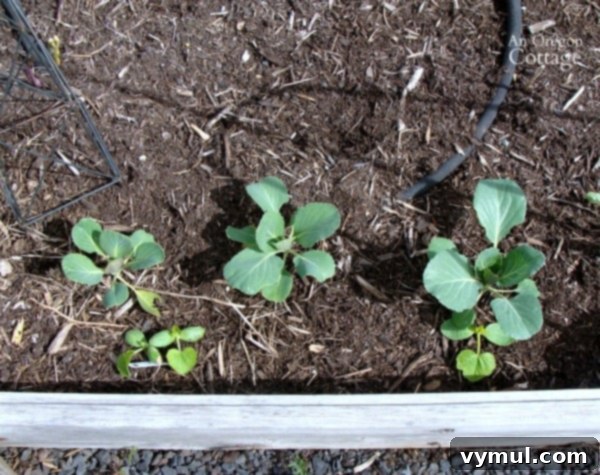
To truly appreciate the dramatic impact of row covers, consider the stark contrast. These three small cabbages, shown above, were planted at precisely the same time as their counterparts in the first photo, in a garden bed merely three feet away. These were extra seedlings that simply didn’t fit into the main, covered bed, so I haphazardly placed them in an out-of-the-way spot, essentially left to fend for themselves without any protection.
The difference, truly, is astonishing, isn’t it? While these unprotected little cabbages did manage to grow somewhat, and they appear outwardly healthy, their ‘brothers’ under the row cover are approximately three to four times larger in size and significantly more developed. This visual testament powerfully underscores the growth advantage offered by row covers.
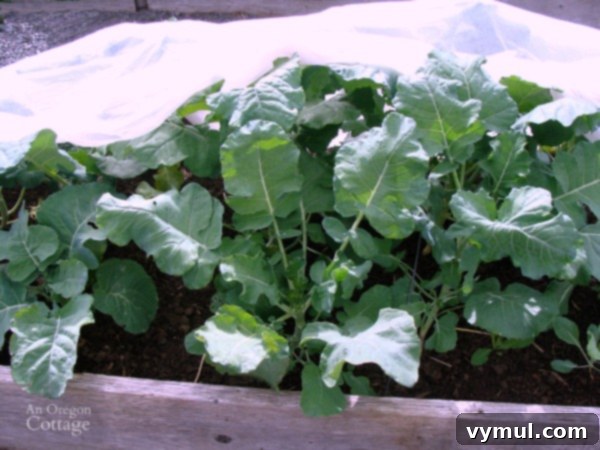
The broccoli plants also exhibit this accelerated growth pattern. The plants pictured here are already about two feet tall, and some are even beginning to form tiny green heads, indicating an early and robust yield. They boast exceptionally healthy foliage, entirely free from the characteristic damage inflicted by flea beetles, as well as the notorious aphids and cabbage loopers. This protection ensures they will produce their delicious heads much sooner and more prolifically than any plants left exposed without a cover. They certainly look pretty content and vigorous, wouldn’t you agree?
So, let’s consolidate: what are the unequivocal benefits of integrating row covers into your brassica gardening strategy?
To encapsulate the transformative power of row covers, I am confident you will absolutely love growing your broccoli, cabbage, and cauliflower under their protection because they consistently deliver on these key promises:
- Remain Relatively Bug-Free: A physical barrier is the most effective organic pest control.
- Mature Faster: The stable microclimate promotes quicker growth and development.
- Grow Healthier: Protected from pests and harsh weather, plants exhibit superior vigor and disease resistance.
- Produce Sooner: Accelerated growth means an earlier and often more abundant harvest.
- Enhance Plant Quality: You’ll notice better texture and flavor in your pest-free produce.
- Reduce Gardening Stress: Less time battling pests means more time enjoying your garden.
From my own experience, I can confidently say that I no longer even consider attempting to grow these valuable crops without the reliable protection of a row cover! It’s an investment that pays dividends in taste, yield, and peace of mind.
What about you – have you experienced the magic of row covers in your garden? Share your thoughts and experiences!
Note: This article has been updated – it was originally published in 2010 and refreshed to include the latest insights and experiences.
Disclosure: affiliate links in this article will earn commission based on sales, but it doesn’t change your price. Click here to read my full disclaimer and advertising disclosure.