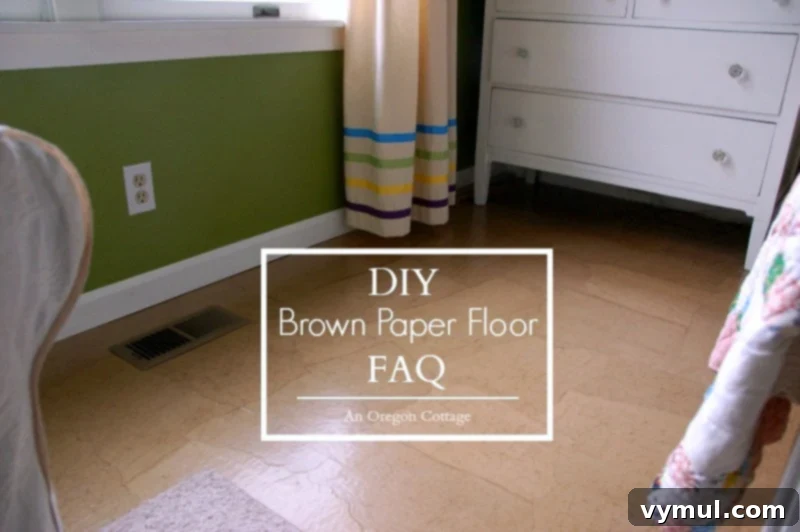
DIY Kraft Paper Flooring: The Ultimate Guide to Affordable, Durable, and Stylish Floors
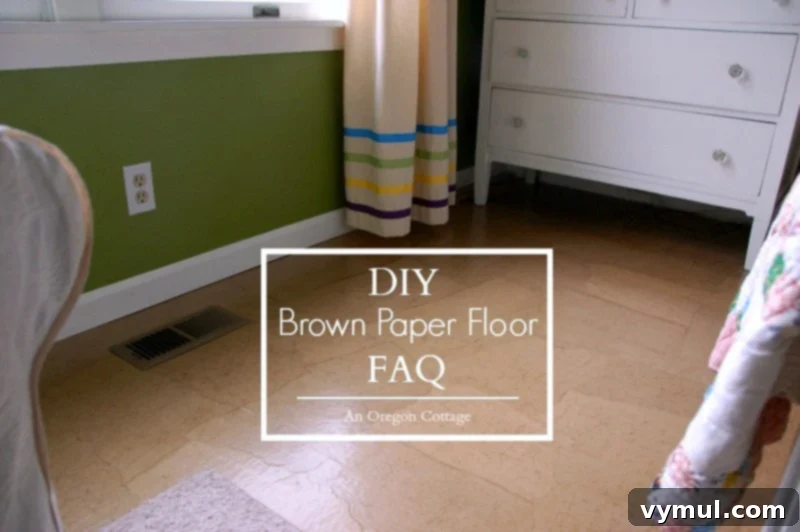
Embark on an exciting journey to transform your home with a flooring solution that’s both incredibly affordable and stunningly unique: DIY Kraft Paper Flooring. Our comprehensive tutorial on creating a brown kraft paper floor that beautifully mimics the look and feel of leather has become our most celebrated guide. This innovative approach offers a fantastic alternative to traditional wood floors, delivering a distinct aesthetic without breaking the bank. The widespread success of this method, even earning us a feature in Cottages and Bungalows magazine back in April 2011, has inspired countless homeowners and DIY enthusiasts to try it for themselves.
With its growing popularity, this DIY brown paper flooring technique also generates a lot of questions. From installation queries to durability concerns, we receive inquiries daily across our blog, YouTube channel, and email. To help you confidently undertake this project, we’ve compiled and answered the most common questions about this easy, budget-friendly, and visually appealing flooring option.
Before diving into the specifics, let’s cover a few essential points that address many general concerns:
- Always Conduct a Test Area: If you have any doubts, or if your specific subfloor material is unique, create a small test patch in an inconspicuous area. If no such spot exists, use a spare piece of material identical to your floor to experiment. This step is crucial for understanding how the paper and finishes will react.
- Embrace Experimentation: Don’t be afraid to deviate from our exact method and try new ideas! Whether it’s a different paper type, stain, or application technique, use your test patch to explore creative possibilities. DIY is all about personalizing your space.
- Understand Personal Experience Limitations: While we share our extensive experience, we cannot predict precisely how your unique environmental conditions, subfloor type, or usage patterns will impact the flooring’s performance. Every DIY project has its own variables.
- Go for It: Given the relatively low cost and minimal impact of this project, we always encourage people to try something different. Don’t let fear hold you back from being creative and achieving a truly custom look for your home.
Brown Kraft Paper Flooring: Frequently Asked Questions Answered
1. Can I install DIY kraft paper flooring over concrete?
This is by far our most frequently asked question! While I haven’t personally installed paper flooring on concrete, our community of DIYers has shared valuable insights. The consensus is that using only polyurethane to adhere the paper works effectively for concrete surfaces. Unlike wood-based subfloors, where a 3:1 glue-to-water ratio is typically used, concrete floors seem to benefit from a direct application of poly. Simply paint the concrete with polyurethane, lay down your crumpled kraft paper, and then apply more poly over the top. Remember, if your concrete is below grade or prone to moisture, a test area is even more critical to assess potential moisture issues.
“Yes, I just did it on concrete in my son’s room, it looks great, I love it – about to do the hallway now. I just made sure to scrape it clean so it was smooth. But we love it, so glad I found this.” – A satisfied YouTube commenter.
2. Can this be applied to tile, vinyl, or other subfloors like pressboard or plywood?
Referencing our general suggestions above, and the advice for concrete, the principles remain similar. My direct experience has primarily been with wood-based subfloors, specifically particle board (which tends to produce more wrinkles) and plywood (resulting in fewer wrinkles). Applying paper over existing tile might leave noticeable grout lines, which could be an undesirable aesthetic for some. If your linoleum is in good condition, without significant bumps or ridges (as these tend to show through once the paper dries), the paper should adhere well. As always, a test patch in an out-of-the-way spot is highly recommended to evaluate adhesion and appearance.
“If you have a floor that already has a coat of poly on it (we had a painted floor), you can use poly for your glue and it works very well!” – A helpful reader comment, suggesting polyurethane as an adhesive on painted floors.
3. How durable is DIY kraft paper flooring? Does it really last?
Durability is the second most common concern, and based on our experiences, the answer is a resounding yes! In our previous home, we applied kraft paper flooring to the stairs and the entire 400 sq. ft. upstairs area three years before selling. The stairs, surprisingly, looked as good as new. Upstairs, only one spot showed a tear due to moving heavy furniture, which was easily touched up prior to sale. In our current home, our son’s bedroom floor, completed two years ago, remains in excellent condition. The secret lies in the polyurethane finish. We recommend at least four coats, though more can be applied for enhanced protection, keeping in mind the increased cost. It’s truly impressive how resilient paper can be when properly sealed.
- UPDATE: For a visual demonstration of its long-term performance, check out our video below, showcasing how our paper floors have held up after four years of daily life.
4. Can I install this flooring in high-moisture areas like bathrooms or kitchens?
While I haven’t personally tackled these areas, several readers have successfully installed kraft paper flooring in their bathrooms. They report positive outcomes, with one recalling her parents’ paper floor lasting over seven years in a bathroom during the 70s. Another reader mentioned minor wear in front of the bathtub, which was easily remedied by adding more paper and polyurethane. Kitchens, with their higher traffic and potential for spills, might present a greater challenge, but the core principle of protective poly coats remains. Given the modest cost (around $60-70 for materials and a few days of labor), it’s a worthwhile experiment for an intriguing and temporary or long-lasting unique floor.
5. Is kraft paper flooring suitable for stairs, walls, or counters?
Absolutely! The versatility of this technique extends beyond traditional floor surfaces. As mentioned regarding durability, I’ve successfully applied it to stairs, and many others have too, achieving beautiful and resilient results. The low cost of materials makes it an ideal candidate for creative experiments on walls, counters, or other surfaces you wish to transform. Don’t hesitate to give it a try and discover its potential!
6. What is the typical installation time? Do wrinkles smooth out? Is it hard on the body?
- Installation Time: You can expect to complete the basic technique, as outlined in our video tutorial, over a long weekend—approximately three days. If you plan to stain the paper, allow for additional drying time.
- Wrinkles: Initially, after the glue/water mixture dries, the wrinkles will soften. They might become more pronounced again after applying the polyurethane coats. However, as the poly fully cures over the following week, these wrinkles will significantly lessen, becoming hardly noticeable and contributing to the floor’s unique, leather-like texture. For more on this, read our post about overcoming initial doubts.
- Physical Demands: Be prepared for some strain on your knees and back. This project involves a fair amount of kneeling and bending, so comfort measures like knee pads are highly recommended.
7. Is it loud or slippery? How do you manage transitions to other flooring types?
- Noise: While not excessively loud, kraft paper floors do produce more sound than carpet, as you’re essentially walking on a sealed subfloor. Expect a slight increase in ambient noise and occasional creaks.
- Slipperiness: Like any surface coated with polyurethane (e.g., wood floors), it can be slippery. We recommend using rugs with non-slip pads underneath. For homes with small children, consider using socks with skid-resistant bottoms.
- Transitions: For seamless transitions to other flooring, we use standard wood thresholds purchased from home improvement stores. These can be stained to complement your paper floor or the adjacent flooring, creating a tidy and professional finish between the lower paper floor and higher wood or carpeted areas.
8. How does it hold up with pets, particularly dogs?
Our dog doesn’t frequent the rooms with paper flooring, so my knowledge primarily comes from reader feedback. Many pet owners report positive experiences, noting that the multiple polyurethane coats offer considerable resistance to pet-related wear. The beauty of this flooring is its repairability: if a small area gets scratched or torn by pets (or moving furniture), you can simply tear and crumple a new piece of paper, poly it down over the damaged spot, and it blends seamlessly. This easy repairability is a distinct advantage over many other flooring types.
However, it’s realistic to expect some marks from dogs on almost any floor (excluding carpet, which has its own challenges). If you’re concerned about chewing, a quick online search regarding polyurethane finishes and pet safety might be beneficial. While there aren’t exposed edges to chew, every pet is different.
9. Can I use a roller for polyurethane application? Does it smell? Is sanding between coats necessary?
- Polyurethane Application: While some readers have successfully used foam mop-head applicators or rollers, I personally prefer a brush. Brushes offer greater control, especially for corners and edges, and reduce the likelihood of introducing bubbles into the finish, a common issue with rollers.
- Odor: If you use water-based polyurethane, the smell is minimal and dissipates quickly, a stark contrast to the strong, lingering fumes of oil-based products.
- Sanding: I have never found it necessary to sand between coats for kraft paper flooring. This project aims for a rustic, protective finish rather than a fine, furniture-grade smoothness, making sanding an unnecessary step.
10. Can I use other types of paper or even fabric for this technique?
Absolutely! Feel free to experiment with different types of paper to achieve various textures and looks. As with all modifications, testing a small area first is always recommended. Regarding fabric, I haven’t personally tried it. You might encounter challenges with fraying edges when brushing on the adhesive, especially with loose-weave fabrics. However, this is where experimentation comes in – you might discover a fantastic new technique!
11. Can the paper be cut into strips for a different aesthetic?
Yes, a few readers have successfully used paper cut into strips, and they love the resulting look. When working with strips, it’s generally easier to handle and glue down smaller pieces, which allows for more control and creates a distinct pattern. Consider keeping the strip sizes manageable for an easier application process.
12. Can I use oil-based polyurethane instead of water-based?
I strongly advise against using oil-based polyurethane. Although some readers have reported success, my personal experience was disastrous. Driven by the lower cost, I once tried an oil-based poly and ended up with awful, oily splotches. I had to tear up the entire floor and restart the project. Furthermore, the strong, pervasive odor lingered for days. From that experience, I’ve vowed never to use an oil-based product on kraft paper floors again. Water-based polyurethane is the clear recommendation for best results and a more pleasant application experience.
13. Can the paper flooring be stained? How?
Yes, staining is a popular option, and readers have achieved fantastic results. Here are three methods:
- Stain After Glue Dries, Before Poly: Apply your chosen water-based stain to the floor immediately after the glue/water mixture has fully dried. Use a foam pad applicator or brush. Allow the stain to dry completely before beginning the polyurethane coats. This reader’s technique provides a good example, though I still advocate for water-based products only.
- Mix Stain into Glue/Water Mixture: For a more time-efficient approach, mix a water-based stain directly into your glue/water adhesive mixture. This effectively stains the paper as you lay it down. It requires some prior experimentation with ratios to achieve your desired color intensity.
- Tint Polyurethane (for Concrete Floors): If you’re working with concrete floors and therefore not using the glue/water mixture, you can tint the polyurethane itself. Some polyurethane products are available with pre-mixed stain, or you can experiment with adding a compatible tint.
14. Can I install another type of flooring over it later? Do I need to remove it?
One of the hidden benefits of kraft paper flooring is its flexibility. If you decide to install traditional wood floors, laminate, or even carpet in the future, the paper flooring typically provides a stable and flat base, allowing the new flooring to go right over the top without issues. There’s generally no need to rip it up, saving you significant time and effort. While painting over it isn’t a common practice, the DIY world is full of surprises! If you’re unsure about specific new flooring types, a small test patch (yes, again!) is always a good idea.
15. How do you clean and maintain kraft paper floors?
Cleaning kraft paper floors is surprisingly simple and much like caring for wood floors. I vacuum weekly with a canister vacuum to pick up dirt and debris. For deeper cleaning, I use a slightly damp mop as needed. Since our paper floors are in bedrooms, they don’t require frequent mopping. The key is to avoid saturating the floor with water; a damp mop is perfectly sufficient. They are truly easy to care for!
16. Can it be repaired if it tears or gets damaged? How?
Yes, repairs are incredibly straightforward. If a tear occurs, simply take a new piece of brown kraft paper, crumple it, and tear it to the desired size and shape to cover the damaged area. Apply polyurethane to the floor, lay down the new paper patch, and then brush more poly over the top. Allow it to dry, and repeat the poly application for the desired number of coats, blending it seamlessly with the existing finish. It will look good as new!
17. What about resale value of a home with kraft paper flooring?
From a renovation perspective, kraft paper flooring is an exceptionally inexpensive update, whether it’s a permanent solution or a beautiful interim fix until you can afford something else. When we sold our previous home, the stairs and second floor featured this flooring, and it posed no issues. In fact, the new homeowners found it unique and “cool” – a sentiment we often hear from visitors. While it might not appeal to everyone (especially those who prefer traditional carpet), its distinct character can be a selling point for the right buyer. It offers a custom, handcrafted feel that many people appreciate.
- UPDATE: We’ve successfully sold the house pictured here, confirming that the distinctive paper flooring did not hinder the sale.

As you can see, this affordable and creative flooring solution generates a lot of discussion and curiosity! If you’ve read this far, you’re likely interested in trying it yourself. We encourage you to share any further questions you might have in the comments section below. Our community, or we, will do our best to provide answers, which we’ll continue to add to this comprehensive guide.
Furthermore, if you’ve already embarked on your own DIY kraft paper flooring project, please share your experiences! We’d love to hear about your results, tips, and tricks. Don’t forget to include a link if you’ve documented your journey on a blog or website!