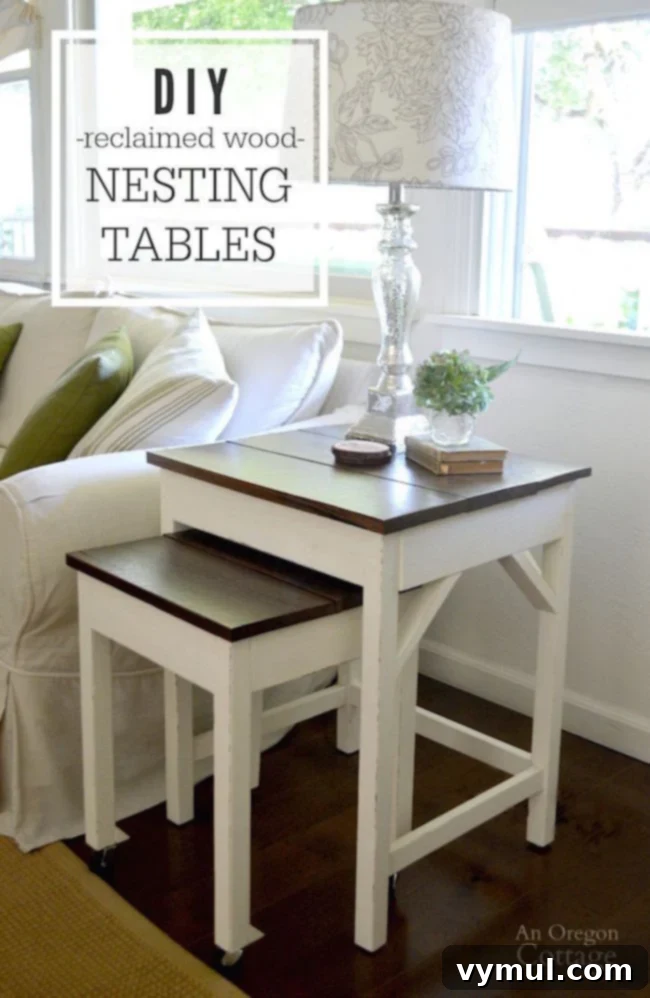
DIY Reclaimed Wood Nesting Tables: Rustic Farmhouse Style on a Budget
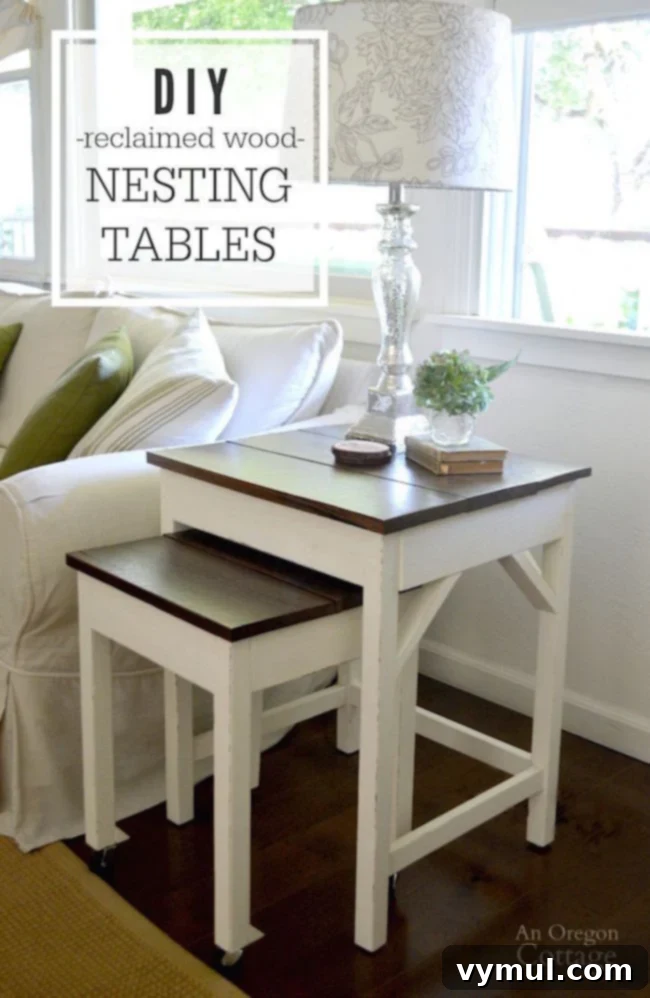
There’s an undeniable charm that comes with handmade furniture, especially when it tells a story through reclaimed wood. Brian and I embarked on a woodworking adventure to create a stunning set of DIY reclaimed wood nesting tables, bringing a touch of farmhouse industrial elegance to our living space. Inspired by simple plans from Ana White, we utilized wood we already had, including beautiful barn wood for the tops, and added casters for that distinctive industrial flair. This project not only transformed our living room but also proved that creating custom, high-quality furniture doesn’t have to break the bank.
Some links in this article are affiliate links, meaning if you click on them and make a purchase, I will receive a small commission at no additional cost to you. Your support helps keep this content free!
The Journey to Our Dream Side Tables: Why DIY?
I had been eagerly anticipating the moment I could share the story behind these incredible DIY reclaimed wood nesting tables. It feels like such a prolific season when there’s an abundance of do-it-yourself projects to showcase, doesn’t it? These adorable tables were crafted from an unexpected source: wood we already had in our stash from previous projects and even old barn wood generously given to us by a neighbor. It’s truly amazing what treasures you can find (or be given!) when you start looking for materials with a DIY mindset.
The only new items we needed to purchase were the casters for the smaller table, which cost approximately $2.50 each. This meant our entire set of custom-designed nesting tables, perfectly tailored to our decor – including our beloved DIY card catalog table – came in at a grand total of $10. Considering that similar table sets can retail for $150 or more, you can imagine my delight. I’m not only thrilled with how fantastic they look but also immensely proud of the incredible savings we achieved.

Solving Our Living Room Dilemma with Custom Furniture
As I previously mentioned when showcasing our card catalog table, Brian and I had never owned truly coordinating side tables for our couch throughout our entire married life. While I’ve never been a fan of overly matchy-matchy decor, and it was perfectly acceptable for a while, I recently decided I wanted a pair of matching lamps. And for matching lamps, you pretty much need functional side tables, right?
However, I had a few specific requirements (which Brian would undoubtedly tell you is typical of me!). The tables couldn’t perfectly match the lamps – that would be too much uniformity for my taste – but they certainly needed to coordinate harmoniously. More importantly, they had to be genuinely useful. We had spent years making do with various tables and makeshift benches, so I craved some integrated storage, perhaps drawers, for essentials like remotes and reading glasses (this is where the card catalog table truly shines!). Additionally, I envisioned a set of nesting tables as the ideal solution for easily providing extra surfaces when we had guests over, offering flexibility without cluttering the space.
The “We Can Make That” Moment
To say I was shocked when I started searching for suitable side tables would be an understatement! It’s clear I hadn’t truly considered their cost before. Everything I liked, even remotely, started at $200 and quickly went upwards. My furniture budget, modest at best, was primarily accumulated from our big garage sale, and these prices simply weren’t sustainable. Adding to the frustration, most of the tables I admired didn’t even coordinate with our existing decor. It became a recurring thought: every time I saw a wooden piece I fancied, my inner voice would exclaim, “Gee, we could make something like that so easily!”
Around the same time we committed to transforming the card catalog into a unique side table, I stumbled upon this fantastic DIY plan for wood nesting tables on Ana White’s website. The design was surprisingly straightforward, primarily utilizing readily available 2x4s and 1x2s. And then it hit me: we had the most incredible mahogany barn wood from our neighbor – a perfect match for the table tops. So, I did what any resourceful wife would do in that situation.
Building Our Reclaimed Wood Nesting Tables: From Plans to Reality
I promptly emailed the Ana White plans to Brian, with a message along the lines of, “Oh, I just know you could knock this out in no time! You’re so incredibly skilled at projects like this, and it would cost us absolutely nothing! xoxo.” His initial response, as expected, was a classic, “You’re crazy. I don’t know how to make furniture.” But I’m persistent, and I continued to reassure him of his amazing abilities (which is no exaggeration, as you might be gathering). I also reiterated my personal philosophy of “I don’t care about perfection” – it’s not just a catchy phrase for me, I truly embrace imperfections in DIY. My proposal was simple: he would construct the sturdy bases, and I would handle the finishing touches, a perfectly balanced tag-team approach that works for us.
And so, he did. Perhaps there was a bit of good-natured complaining along the way, accompanied by numerous “Are you sure about this?” questions, but ultimately, he brought the tables to life. He largely adhered to the original plans, with one smart modification: shortening the legs of the smaller table. This allowed us to integrate the 1-1/2 inch casters I desired, which not only added functionality but also contributed significantly to the modern industrial look I was aiming for. The transformation of raw wood into functional furniture, all from an initial stash of materials, was truly gratifying.
Embracing the Character of Reclaimed Wood
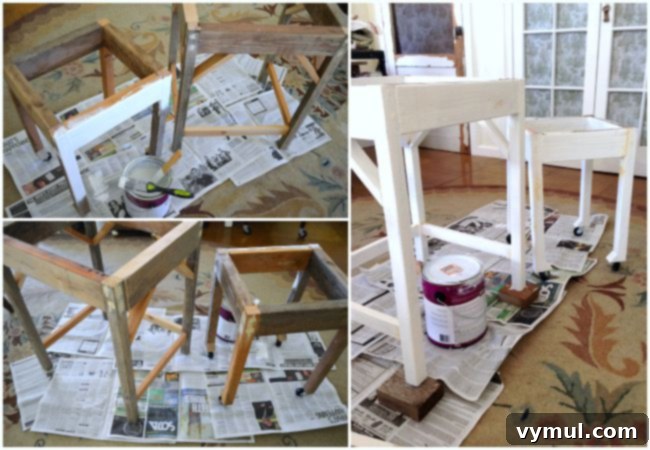
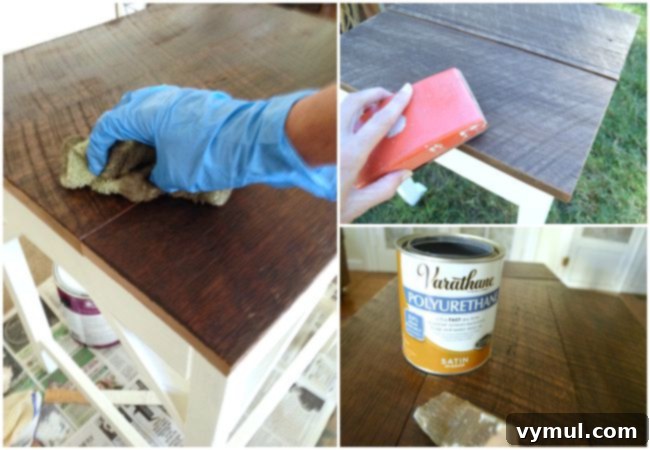
As you can clearly see in the progress photos above, the wood we used for the table bases was genuinely reclaimed. All of it had been patiently waiting in our woodpile, much of it for years. Some pieces were beautifully weathered and gray, hinting at their past life (if all the wood had been this way, I might have simply sealed it to preserve its natural state!). Other pieces retained more of their original color. Many bore distinct characteristics like big gouges, which I carefully filled along with any visible screw holes to create a smooth, unified surface. The beauty of paint, especially white paint, is its transformative power. There wasn’t an imperfection that three coats of white paint couldn’t beautifully cover and unify. My love for white paint knows no bounds – it’s a simple yet effective way to refresh and modernize.
Finishing the Reclaimed Barn Wood Tops
Then there were the table tops – pure gorgeousness in their rough-cut glory. These barn wood pieces had been naturally lightened by years of exposure to the elements, so I opted to stain them slightly with Special Walnut stain. This particular shade darkened them just enough to bring out the rich tones and highlight the captivating saw lines, which are a testament to the wood’s history. I then attempted to mimic the finish of our card catalog top by sanding and rubbing a gray wash over them. However, in the end, the effect was too subtle, and you can barely tell I did anything at all! But honestly, who’s complaining? I certainly won’t! After applying a couple of coats of a durable satin water-based polyurethane (the same product, just with a different label from the one pictured), we achieved this delicious result:
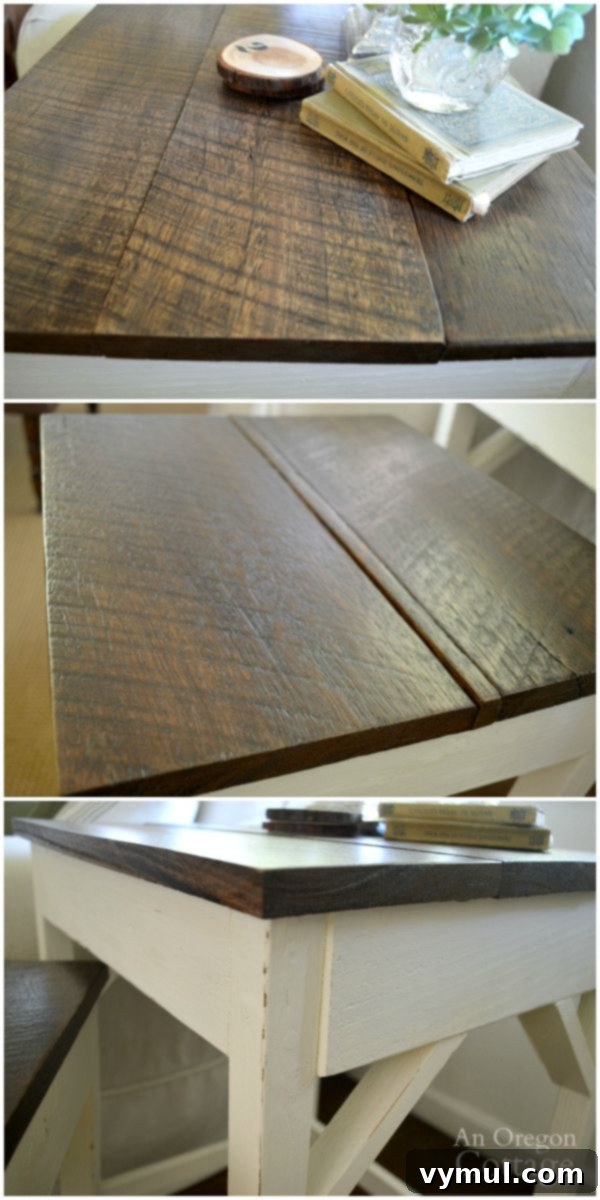
The tops now boast a rich, warm, and beautifully worn wood finish with subtly distressed edges. For me, that’s absolute perfection. And those areas that might not be perfectly smooth or might slightly stick out? Who truly cares? When you admire the tables as a whole, those minor imperfections fade into the background, contributing to the overall character and story of the piece.
Unique Details and the Beauty of Imperfection
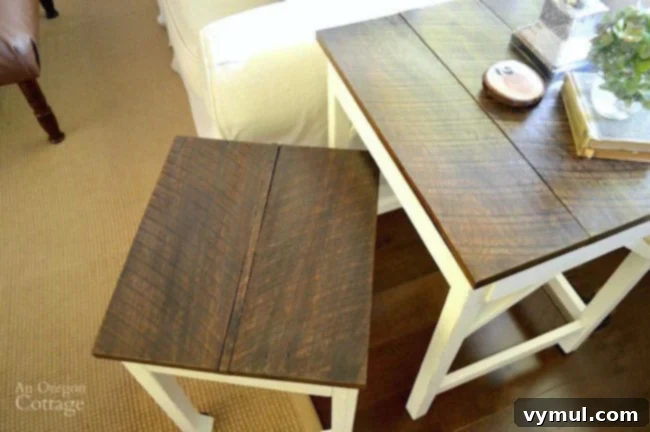
To be completely honest, I had some reservations about the prominent rough-cut marks when we first started the project. However, my desire for these cost-free tables was so strong that I didn’t dwell on it too much, and I’m incredibly glad I didn’t. Once I saw the completed tables and witnessed how those distinct markings on the wood created such a cool and unique statement, I realized what a true treasure we had. It’s a testament to the fact that embracing the natural characteristics of reclaimed materials often leads to the most beautiful and authentic results.
And speaking of unique details, don’t you just love Brian’s clever “patch”? It’s that narrow piece of wood he expertly added to make the barn wood fit perfectly for the small table’s top. To me, this isn’t just a repair; it’s a fantastic design element. Anyone can have a tabletop made from two perfectly matching, full pieces. But this thoughtful addition makes our tables truly special, especially with how the original saw markings on the joined pieces create an almost arrow-like pattern, drawing the eye and adding a layer of visual interest that store-bought furniture simply can’t replicate.
Bringing It All Together: A Harmonious Living Space
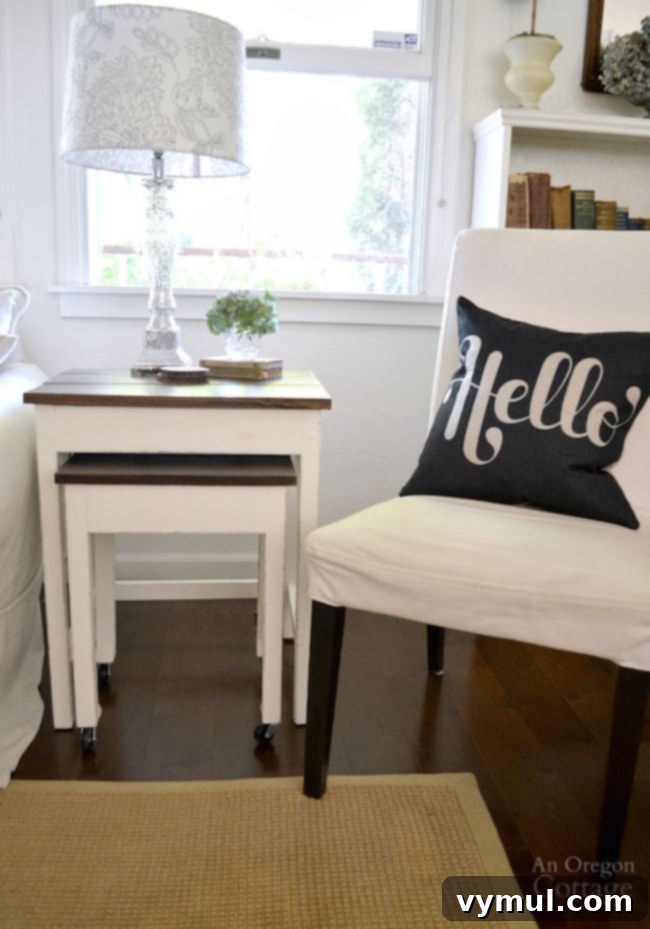
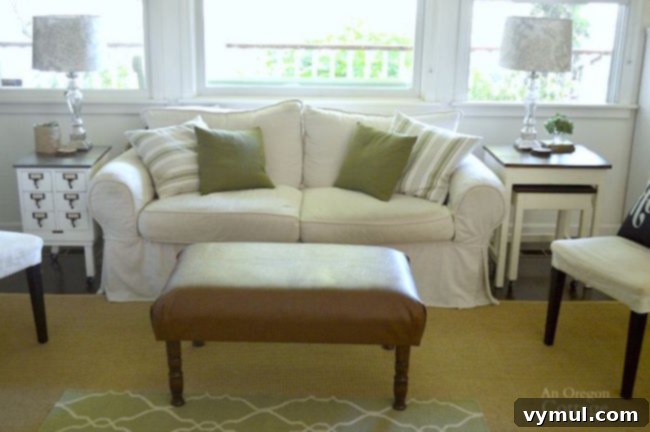
Of course, I couldn’t conclude without sharing a final shot of our two DIY side tables gracing our living room together. The sight of them perfectly embodies the exact look and functionality I had envisioned. Yes, undertaking a DIY project like this requires more time and effort than simply purchasing something new, but the rewards are immeasurable. No one else will have a set of tables quite like ours – they are uniquely custom and reflect our personal style. Plus, the bonus? I still have my furniture savings stash intact, ready to be invested in something truly cool that we simply “can’t make” ourselves, whenever that special piece comes along.
I sincerely hope that these DIY reclaimed wood nesting tables inspire you to embark on your own creative journey. Whether you choose to follow this easy plan to build a brand-new set, or perhaps makeover an existing set of tables (or even a neglected card catalog!) you discover, remember that the possibilities are endless. Pin this article for future reference to remind yourself: if we can do it, you absolutely can too! The satisfaction of creating something beautiful and functional with your own hands is truly unparalleled.
Disclosure: Affiliate links in this article will earn a commission based on sales, but it doesn’t change your price. Click here to read my full disclaimer and advertising disclosure.