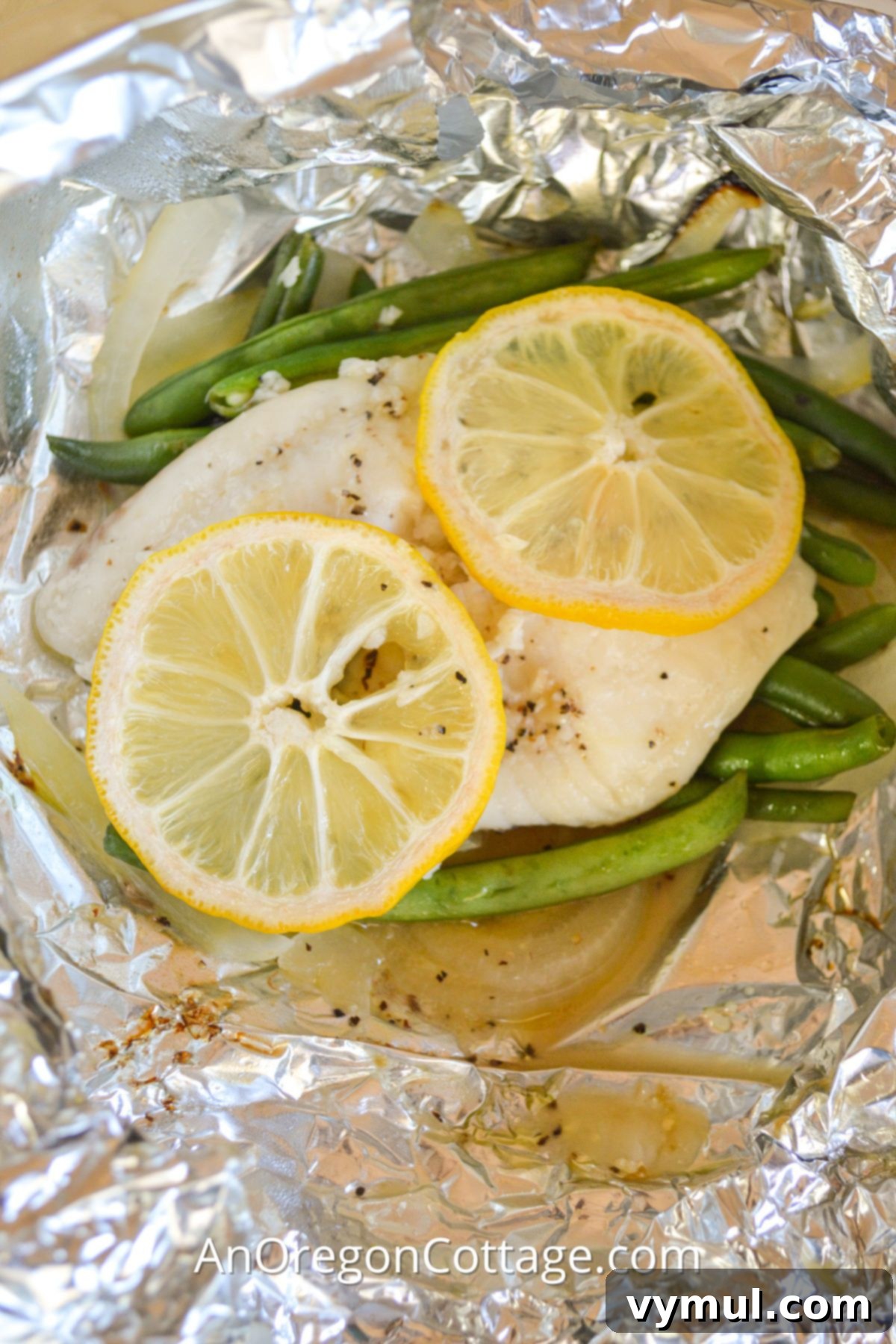
Effortless Lemon Garlic Herb Fish Packets: Grilled or Baked for Perfectly Tender Meals
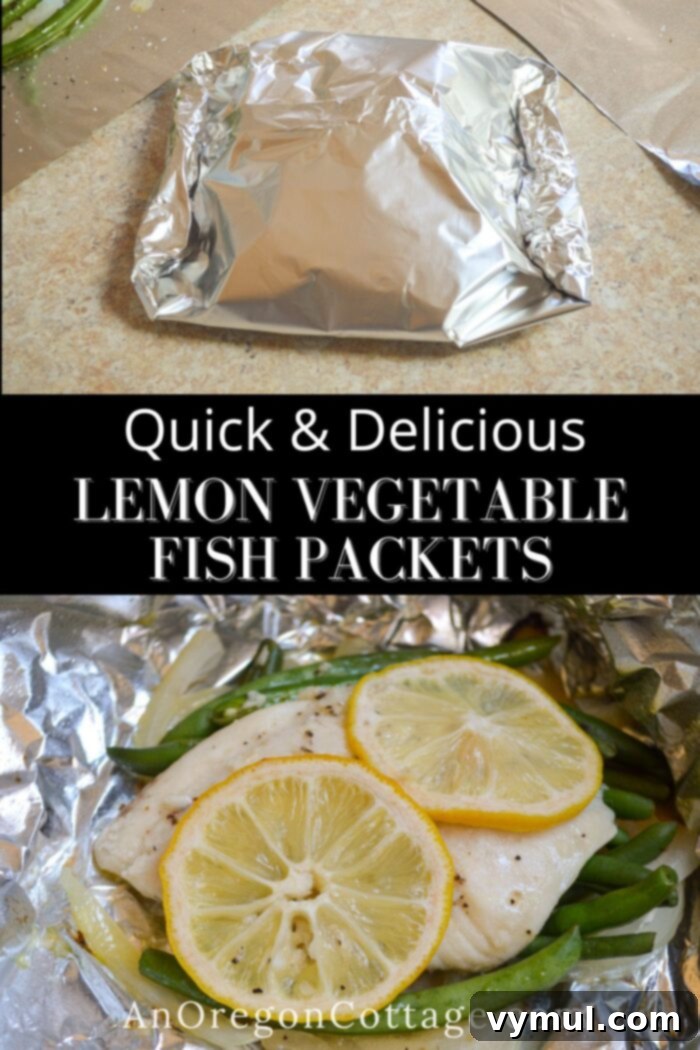
Imagine perfectly cooked, succulent fish bathed in aromatic lemon, garlic, and savory herbs, complemented by vibrant, tender-crisp vegetables. That’s precisely what you’ll achieve with these incredibly simple Lemon Vegetable Fish Packets! This foolproof method guarantees flawless results every time, delivering an explosion of fresh flavors. Whether you choose foil for grilling or parchment for baking, you’ll also enjoy the unparalleled convenience of minimal cleanup.
This recipe is a stellar addition to your repertoire of Quick Healthy Recipes, designed for busy weeknights and enjoyable entertaining alike.
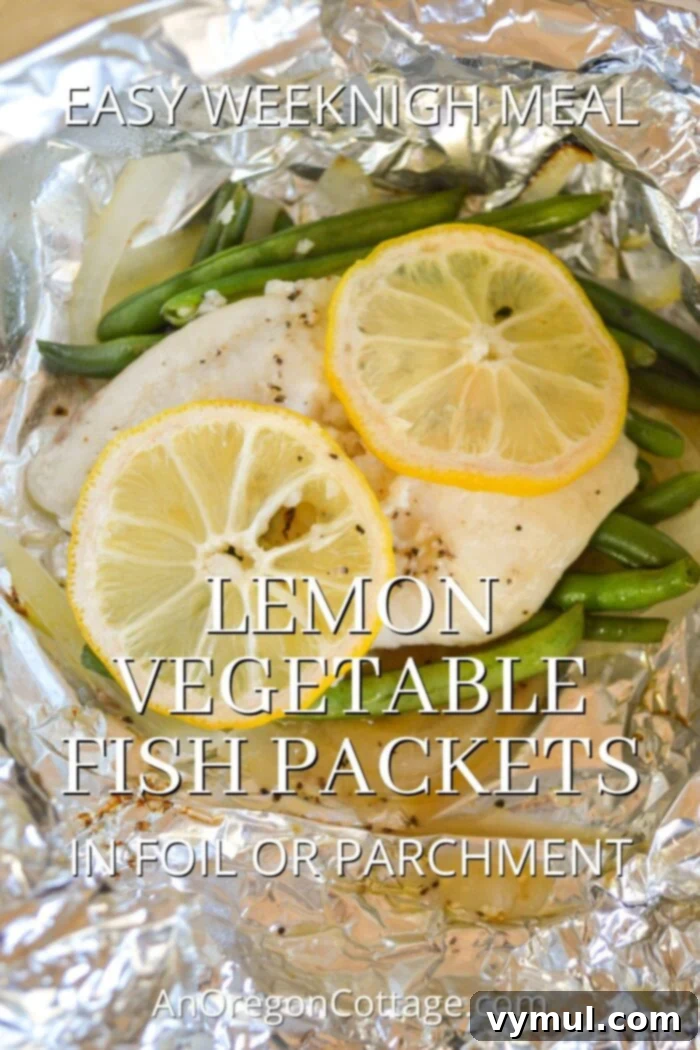
For years, I shied away from cooking fish in packets, convinced it was an unnecessary extra step. My initial thought was that this technique was exclusively for outdoor adventures, like camping trips with savory chicken foil dinners. Why bother with an additional layer of foil or parchment when you could simply grill, bake, or pan-fry? I believed it to be a waste of materials and effort.
However, the first time I finally tried making fish packets, my skepticism melted away with every tender, flaky bite. The fish emerged from its steamy cocoon cooked to absolute perfection – consistently moist, evenly done, and infused with an incredible depth of flavor. This experience completely transformed my perspective on this humble cooking method. It truly is a game-changer for anyone seeking an effortless way to prepare delicious and healthy seafood.
Unlocking Culinary Magic: Why Opt for Fish Packets?
My culinary revelation led me to discover the undeniable advantages of cooking fish in foil or parchment. It’s not just a clever camping hack; it’s a brilliant strategy for achieving perfectly moist, flavorful fish right in your own kitchen or backyard. Here’s what I uncovered:
Cooking fish in foil or parchment creates a steamy, enclosed environment where the fish and vegetables gently cook together, ensuring perfectly moist results and infusing every ingredient with rich seasonings. This method eliminates dry, overcooked spots and allows the vibrant flavors of garlic, lemon, and herbs to thoroughly meld, creating a harmonious and delicious meal.
Beyond achieving superior texture and flavor, here are several compelling reasons why cooking fish in packets has become a beloved staple in my kitchen:
- Effortless Meal Prep: These packets are a dream come true for meal planning. You can assemble them in advance – often in the morning or the day before – and store them in the refrigerator. When dinner time rolls around, simply transfer them to the grill or oven. This convenience is a lifesaver on busy weeknights and makes entertaining a breeze, allowing you to spend more time with your guests and less time in the kitchen.
- Complete One-Dish Wonder: By cooking your chosen fish alongside a medley of fresh vegetables, you create an almost complete meal in a single packet. While I often pair these delightful packets with a simple green salad, some crusty bread, or a side of rice or quinoa, you truly don’t have to. All the essential components for a nutritious and satisfying meal are already bundled together.
- Unbeatable Easy Cleanup: Perhaps one of the most celebrated benefits of this cooking method is the cleanup – or lack thereof! Once you’ve enjoyed your meal, simply discard the foil or parchment. There are no greasy pans to scrub, no baking dishes to soak. This makes it an ideal solution for quick weeknight dinners when time and energy are precious.
While I don’t exclusively prepare fish in packets, this technique has undeniably become my trusted go-to for those days when I crave an easy, healthy, and incredibly flavorful meal that’s ready when we are. It’s perfect for summer grilling season and equally fantastic for a cozy winter oven bake. The versatility and consistent results make it an indispensable part of my cooking routine.
Our family’s absolute favorite iteration of this recipe features a delightful combination of mild white fish, a colorful assortment of seasonal vegetables, bright lemon, pungent garlic, and a touch of rich butter. The flavors are simply divine, and the fish is so tender it practically melts in your mouth. Whether it’s grilled outdoors on a warm evening or baked in the oven during colder months, these packets deliver a consistently delicious experience. If you haven’t yet explored the magic of fish packets, I wholeheartedly encourage you to try them; I’m confident you’ll find yourself reaching for this recipe again and again!
IMPORTANT TIP: When grilling, always use aluminum foil. Parchment paper is not suitable for direct flame contact and will catch fire. For baking the packets in the oven, you have the flexibility to use either aluminum foil or parchment paper, both yielding excellent results.
Crafting Your Own Lemon Vegetable and Fish Packets
Essential Ingredients for Your Delicious Packets
Creating these vibrant and healthy fish packets requires a handful of fresh, simple ingredients. The beauty of this recipe lies in its adaptability, allowing you to customize it with your favorite seasonal produce and fish. Here’s a list of what you’ll need to gather:
- Onion: A medium onion, thinly sliced, forms the fragrant base of your vegetable bed, caramelizing slightly as it cooks.
- Green Beans: Fresh green beans, trimmed, provide a delightful crunch and vibrant color. Feel free to substitute with other seasonal vegetables like tender asparagus spears, thinly sliced carrots, colorful bell peppers, finely chopped cabbage, or nutrient-rich kale. The key is to choose vegetables that cook at a similar rate to the fish.
- Olive Oil: A drizzle of good quality olive oil helps tenderize the vegetables and carries the seasonings beautifully.
- Salt & Pepper: Essential pantry staples for seasoning both the vegetables and the fish to perfection.
- White Fish Fillets: Opt for firm white fish such as tilapia, cod, or halibut. These fish varieties hold up well to the steaming process and absorb flavors wonderfully. You can also experiment with salmon or other heartier fish; just remember to adjust cooking times accordingly for thicker fillets.
- Butter: Melted butter adds a rich, luxurious mouthfeel and helps to distribute the garlic and other seasonings evenly over the fish.
- Garlic: Freshly minced garlic is crucial for that irresistible aromatic kick that pairs so well with lemon and fish.
- Red Pepper Flakes (optional): For those who enjoy a subtle hint of heat, a pinch of red pepper flakes adds a wonderful warmth to the dish.
- Lemon: Fresh lemon, thinly sliced, is the star of the show, providing bright, zesty notes that elevate all the other flavors. You’ll use slices both inside the packet and potentially a squeeze of fresh lemon juice before serving.
- Aluminum Foil or Parchment Paper: Heavy-duty aluminum foil is ideal for grilling, while either foil or parchment paper can be used for baking. Ensure you have ample supply to create sturdy packets – and importantly, remember: NOT wax paper!
Simple Step-by-Step Directions to Assemble
One of the many charms of these fish packets is how incredibly quick and easy they are to prepare. With just about 10 minutes of hands-on preparation, you’ll have a gourmet-tasting meal ready for the grill or oven.
1. Prepare Your Foundation: Begin by slicing your onion into thin rings and trimming the ends of your green beans. Next, tear off four generous pieces of heavy-duty aluminum foil or parchment paper. Each piece should be approximately 15 inches long to ensure enough material for proper sealing. If using standard aluminum foil, it’s a good idea to double up each piece for added strength, especially if grilling. Adjust the number of packets based on how many servings you need.
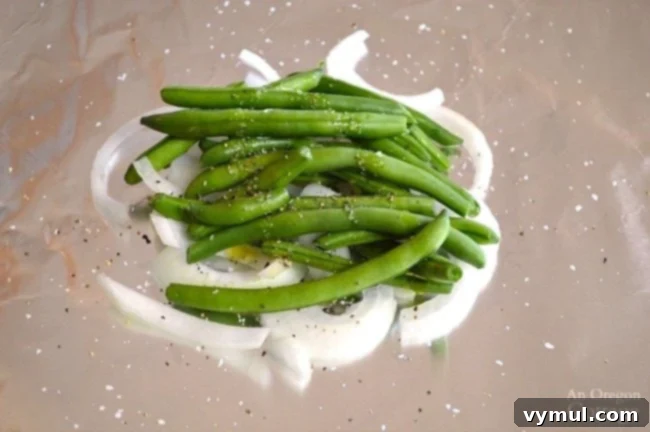
2. Build Your Vegetable Bed: Divide the sliced onion and trimmed green beans evenly among your prepared foil or parchment sheets. Layer the onions first to create a soft base, followed by the green beans. Drizzle a small amount of olive oil over the vegetables, then season them generously with salt and freshly ground black pepper.
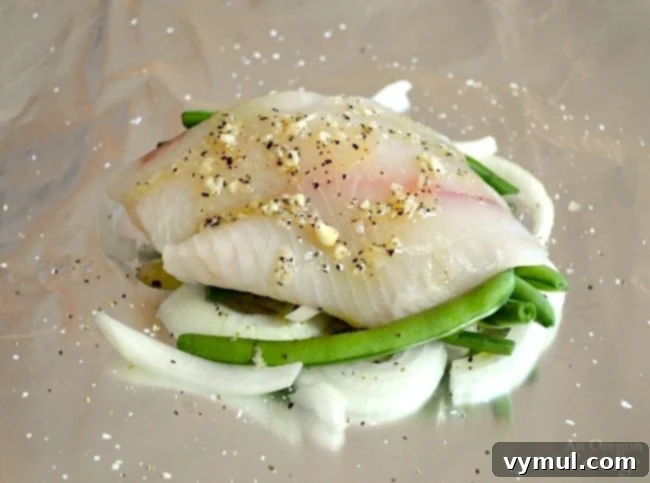
3. Place the Fish: Carefully lay one fish fillet on top of each pile of seasoned vegetables. Ensure the fish is centered, ready to absorb all the delicious flavors during cooking.
PRO TIP for even cooking: If your fish fillets have noticeably thin edges or tails, gently tuck them underneath the main body of the fillet. This simple trick helps prevent those thinner parts from overcooking and becoming dry while the rest of the fish reaches perfect tenderness.
4. Infuse with Flavor: In a small bowl, combine the melted butter, minced garlic, a pinch of salt and pepper, and the optional red pepper flakes. Stir thoroughly to ensure all ingredients are well mixed. Then, spoon this aromatic butter-garlic mixture evenly over each fish fillet, ensuring every piece is coated with this incredible flavor enhancer.
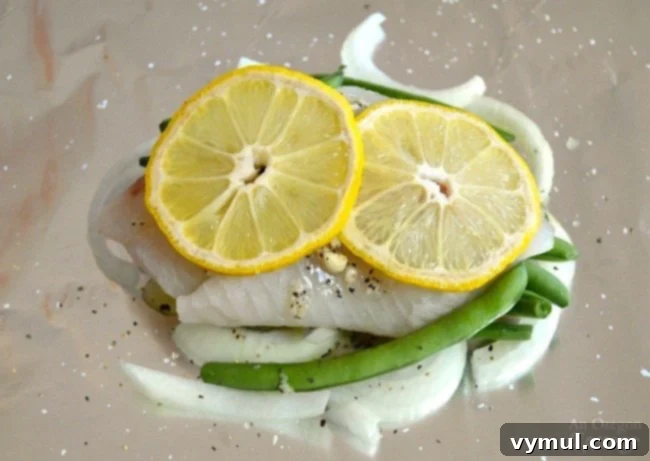
5. Add Zest and Seal: Place two thin slices of fresh lemon on top of each fish fillet. These lemon slices will release their vibrant oils and juice as the packet cooks, infusing the entire meal with bright, citrusy notes. Now it’s time to carefully wrap your vegetables and fish, sealing the edges tightly to create a secure packet.
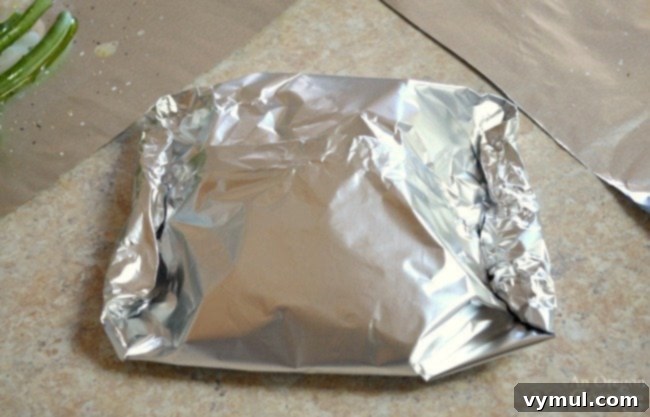
Expert Tips for Wrapping & Sealing Your Fish Parcels
Properly sealing your packets is key to ensuring the fish cooks evenly and all the delicious juices and aromas are contained. Whether you’re using foil or parchment, the technique is quite similar.
Note: When using parchment paper, the technique for sealing is much the same as with foil. The main difference is that parchment requires slightly sharper, more deliberate folds to hold its shape securely, ensuring that the steam stays trapped inside for optimal cooking.
- Folding the Top Seal: To begin wrapping, bring the two longer sides of your foil or parchment up and over the ingredients, meeting them in the middle. Hold these two pieces together firmly and then fold them over, creating a tight seam. Continue to fold this seam over a couple more times, working your way down towards the contents, until the top edge is securely sealed.
PRO TIP for Steam Management: While sealing, make sure to leave a slight bit of room or a small pocket of air within the center seal. This allows for steam to build up during cooking, which is crucial for gently cooking the fish and vegetables, preventing the packet from bursting, and ensuring a perfectly moist outcome.
- Sealing the Sides: Once the top is sealed, move on to the shorter sides of the packet. Fold each short side inwards, crimping it over a couple of times. This will result in a neat, square-ish, and tightly sealed parcel, ready for cooking. Ensure all edges are completely closed to prevent any flavorful juices from escaping.
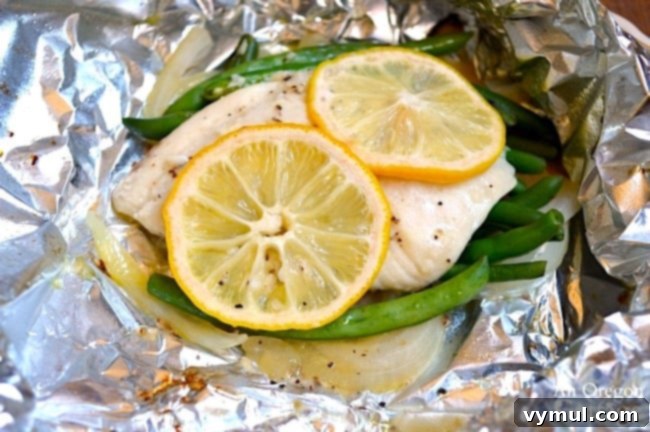
6. Cook Your Flavorful Fish Packets: Now for the final, exciting step – cooking your perfectly assembled packets!
- Grilling Method: If you’re opting for the grill, preheat it to a medium-high temperature. Place the foil packets directly onto the hot grill grates. Close the grill cover and cook the fish for approximately 15 minutes. For most 1/2-inch thick fillets, this will be sufficient. There’s no need to turn the packets; the steam trapped inside will ensure even cooking. The fish is done when it flakes easily with a fork.
- Baking Method: For oven baking, preheat your oven to 400 degrees Fahrenheit (200 degrees Celsius). Arrange the foil or parchment packets on a baking sheet. Bake for about 20 minutes, or until the fish is cooked through and flakes effortlessly.
And just like that – with minimal effort and incredible results – your delightful lemon vegetable fish packets are ready! These simple, whole-food recipes truly demonstrate how easy it is to create healthy and satisfying meals at home. This particular recipe is a firm favorite with my entire family, even earning approval from my kids during their notoriously “picky eating” years. The tender fish and flavorful vegetables make it a meal that pleases everyone.
Lemon Vegetable Fish Foil or Parchment Packets: Frequently Asked Questions
It’s incredibly versatile to use various types of fish in these packets! While this recipe features white fish like tilapia, cod, or halibut, you can easily substitute with salmon, snapper, or even shrimp. When choosing a different fish, simply increase the cooking time for any fillets that are thicker than the approximately 1/2-inch tilapia fillets typically pictured in this recipe. For instance, a thicker salmon fillet might require an additional 5-10 minutes of cooking time. Always check for doneness by ensuring the fish flakes easily with a fork.
Yes, cooking fish in aluminum foil is generally considered safe for the majority of people, especially when done in moderation. Reputable sources, such as Reader’s Digest, indicate that “the amount of aluminum that is pulled into the food during the cooking process is very immaterial.” Aluminum foil is a widely accepted and convenient cooking material. However, if you have any personal concerns about using aluminum foil, or if you prefer an alternative, definitely opt for the parchment paper option for baking!
Achieving a good seal is crucial for trapping steam and flavor. To seal a fish packet, start by placing your fish, vegetables, and seasonings in the center of a large piece of foil (about 15 inches long). Then, bring the two longer sides of the foil up to meet directly over the contents. Hold these two pieces together and tightly fold the edges over a couple of times to create a robust seal along the top. After securing the top, proceed to fold each of the shorter sides over a couple of times. This technique ensures a tightly enclosed packet, preventing any precious juices or steam from escaping during the cooking process. Use this identical folding and sealing method when working with parchment paper packets as well.
The choice between parchment paper and aluminum foil largely depends on your cooking method and personal preference. If you are grilling, you absolutely must use aluminum foil, as parchment paper will ignite when exposed to direct flame. However, if you are baking your fish and vegetables in the oven, you can confidently use either foil or parchment. Both materials work effectively, and the folding and sealing techniques remain the same. While parchment packets may “balloon” more during baking due to steam expansion, rest assured that the fish inside remains perfectly sealed and cooks beautifully. Many prefer parchment for its non-stick properties and aesthetic presentation, especially when serving directly from the packet.
So, with all these wonderful benefits and a straightforward recipe, how about making these incredibly flavorful lemony vegetable fish foil or parchment packets for dinner tonight? It’s a meal that promises tender fish, vibrant vegetables, and a delightful burst of fresh flavors, all with the bonus of super easy cleanup.
“This was a great recipe. Had all ingredients on hand oh, and nothing I had never heard of. Will be making this again.” -Dorothy
Print Recipe
Pin Recipe
SaveSaved!
Healthy Lemon Vegetable Fish Packets to Grill or Bake (Foil or Parchment)
Equipment
-
aluminum foil OR parchment paper
Ingredients
- 1 medium onion, sliced
- 1/2 pound green beans, trimmed
- 1 tablespoon olive oil
- 4 fish fillets (tilapia, halibut cod, or similar white fish)
- 2 tablespoons butter, melted
- 3 cloves garlic, minced
- 1/2 teaspoon each salt and pepper, plus more for sprinkling on vegetables
- 1/4 teaspoon red pepper flakes, optional, for a touch of heat
- 1 lemon, thinly sliced into 8 pieces
Instructions
-
To begin, cut four pieces of heavy-duty aluminum foil or parchment paper, each about 15 inches long. If you’re using regular aluminum foil, it’s recommended to double each piece for extra durability. Note: Always use foil if you plan to grill; for baking, both foil and parchment are excellent choices.
-
Divide the sliced onions and trimmed green beans evenly among your prepared pieces of foil or parchment. Create a base by layering the onions first, followed by the green beans on top.
-
Drizzle a little olive oil over the vegetables, then generously sprinkle them with salt and pepper to taste.
-
Place a fish fillet on top of each pile of seasoned vegetables. In a small bowl, combine the melted butter, minced garlic, a pinch of salt, pepper, and the optional red pepper flakes. Stir well, then spoon this aromatic mixture evenly over each fish fillet.
-
Crown each fish and vegetable pile with two thin slices of fresh lemon. Carefully bring the edges of the foil or parchment together and fold them tightly to seal the packet completely, ensuring no steam or juices escape.
-
To Grill: Preheat your grill to medium-high heat. Place the sealed fish packets directly onto the grill grates. Close the grill cover and cook 1/2-inch thick fillets for approximately 15 minutes, or until the fish flakes easily with a fork. There’s no need to turn the packets. Remember to adjust cooking time for thicker fillets as needed.
-
To Bake: Arrange the packets on a baking sheet and place them in a preheated 400°F (200°C) oven. Bake for about 20 minutes, or until the fish is opaque and flakes effortlessly when tested with a fork.
-
Once cooked, carefully unwrap the packets, being mindful of the hot steam that will be released. Serve the delicious lemon vegetable fish directly in their packets on individual plates for a rustic and convenient presentation.
Notes
Nutrition

Other Easy & Healthy Dinner Ideas You May Love:
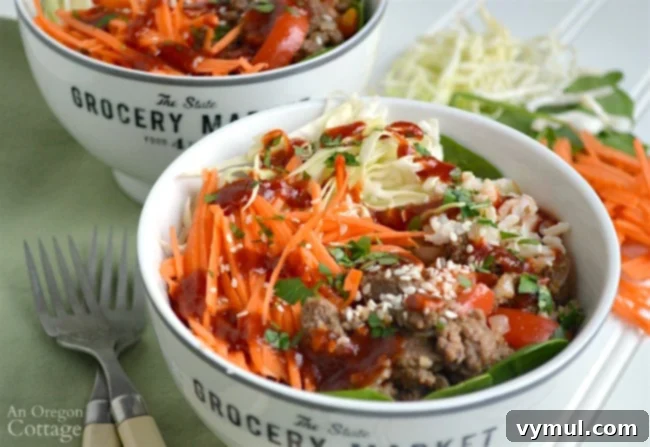
Sriracha Beef and Vegetable Rice Bowls – A quick and flavorful Asian-inspired meal.
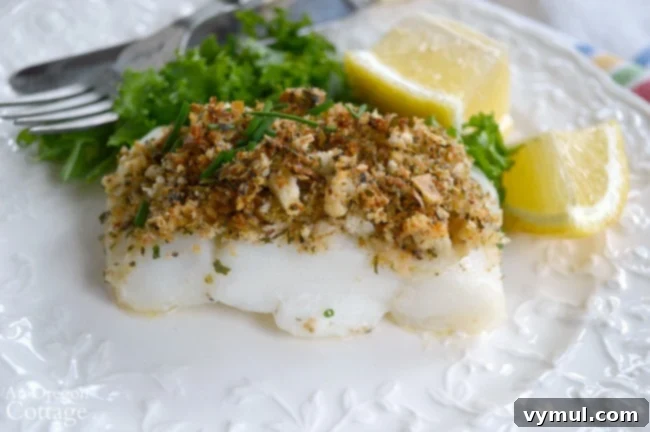
Baked White Fish with Parmesan-Herb Crust (ready in just 20 minutes) – For when you crave a crispy, savory topping.
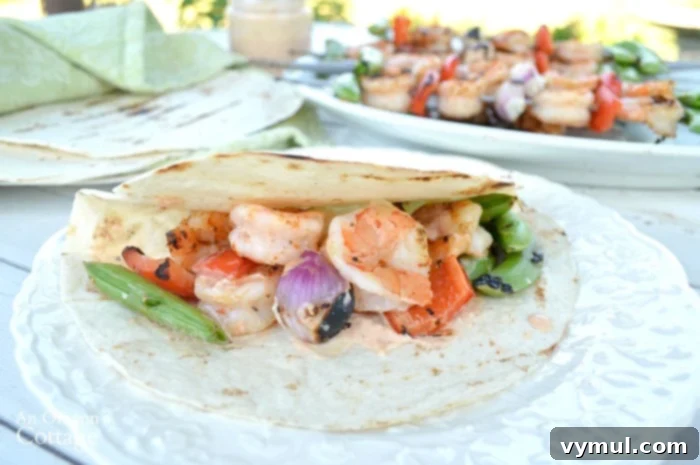
Grilled Shrimp and Vegetable Tacos with Chipotle-Yogurt Sauce – A light and zesty option for a delightful taco night.
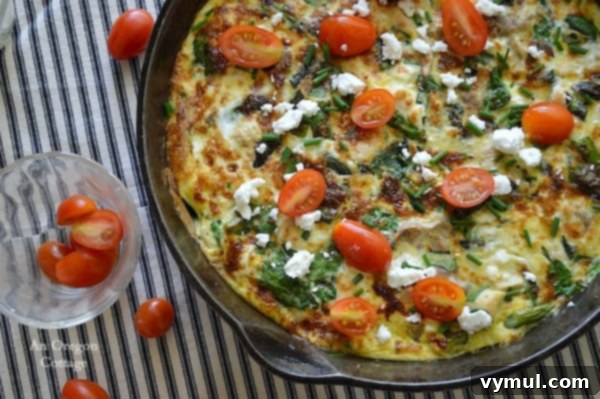
Chicken-Spinach Frittata with Feta & Tomatoes – A versatile dish perfect for brunch, lunch, or a light dinner.